Featured

Cancer Can Happen to Anyone

I walked into the exam room, and my 43-year-old patient was on his phone. He was not quiet in his conversation—he threw out multiple curse words while he continued to talk. Entertained, I waited. He finally hung up.

“So, what’s the news, Doc? Just cut to the chase,” he said. He was leaning back in the chair with one ankle crossed over his opposite knee.

David had widespread colon cancer involving the lungs and liver. His cancer outgrew and outsmarted four lines of chemotherapy. He had chemoembolization twice to his liver lesions. The results of the molecular studies on his tumor specimen revealed no mutations or alterations we could target. At that time, he was on a last-ditch effort oral chemotherapy regimen. He had returned to review scans and lab work; the results were not good.

“Unfortunately, the scans show the cancer in your liver is worse, and you are accumulating fluid in your abdomen. There are also new spots in your lungs. Your labs show the tumor marker has tripled, and liver function tests are very abnormal,” I explained. Just in a snapshot exam across the room, I could see his abdomen protruding more since the last visit, the loss of weight from his typically burly arms and legs, and the yellowing of his skin.

Giving bad news never gets easier. Worse yet, after 23 years of experience in oncology, it often becomes apparent when the end is nearing for people before they have any idea. A clinician can get caught between hope and reality. They must understand what the patient needs to hear and decide how to deliver that information. In this case, David was a straightforward, tell-it-like-it-is guy.

“So, how long do I have?” he asked. And there it was—the weighted question we clinicians are asked that can change the trajectory of a patient’s path. I told him that we would also talk with the physician, but given our last option for treatment was not working and his liver was failing that, he probably had weeks to a month left to live.

He teared up that day. After four years with this patient, he finally cried. It ripped my heart out. This man was the owner of his own construction company. He had a 15-year-old daughter. He carried a chip on his shoulder, which sometimes rubbed people the wrong way. In fact, most of my co-workers preferred not to see this patient because he could be so abrasive. He refused to see certain providers. Somehow, I had stuck with him and could see past his rough exterior.

David was a deer hunter. At this visit, he told us he would go on a hunting trip with his friend that he had planned for months. Given his condition, the physician and I both had reservations, but we encouraged him to go and enjoy himself on the trip, knowing that it would likely be his last.

When David returned from the trip, he was jaundiced, and his lab work suggested that his liver and kidneys were failing. His abdomen was distended with fluid, causing him significant discomfort. He told us that he shot a deer. It had meant the world to him.

David’s friend, who came to most medical visits with him, hung back after David had completed his visit. He again asked the question, “How long does he have?” He said he needed to know because he wanted to bring him to his home to care for him in his final days. I told him it was time.

David died surrounded by family and friends. At 43, with a 15-year-old daughter, there is no plausible explanation for this tragedy. Cancer can happen to anyone.It is not selective.It is not fair.

David was a patient I will never forget. He could be impatient and formidable. He could be rude and crass. He could also be kind and vulnerable. As health care providers, we encounter many personalities and must develop the art of working with each. We may not like a particular personality, but we are responsible for learning to navigate it. David taught me something with every interaction we had.I am grateful and deeply honored to have known him.
Using Acupuncture for Cancer

Is acupuncture beneficial during or after cancer treatment? How can it help?

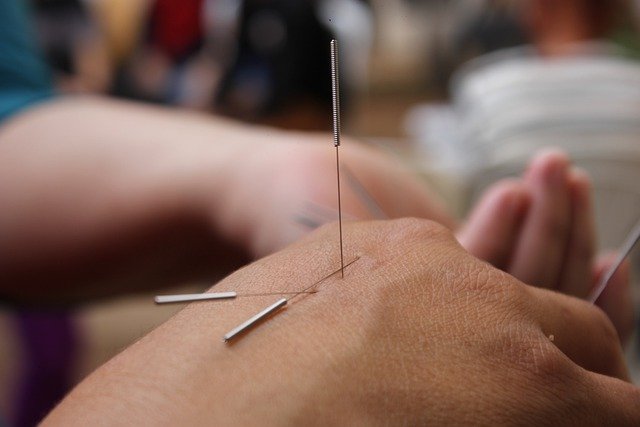
Acupuncture uses thin needles, pressure, and other techniques of traditional Chinese medicine for the prevention and treatment of both symptoms and disease. It is important to use a licensed acupuncturist who adheres to practice guidelines. Johns Hopkins Medicine’s website advises that the American Academy of Medical Acupuncture provides a list of doctors licensed to practice acupuncture. Likewise, it is recommended to review the appropriateness of using acupuncture on an individual basis with one’s medical provider.

There are multiple studies that suggest the use of acupuncture is beneficial for cancer patients undergoing active treatment with chemotherapy, radiation, or endocrine therapy. Acupuncture can help alleviate nausea, vomiting, anxiety, peripheral neuropathy, pain, and fatigue. The National Cancer Institute’s CAM for Patients website reviews multiple clinical trials that prove the effectiveness of acupuncture for these listed symptoms and others.

During ongoing maintenance treatment or after active treatment, acupuncture can continue to play a helpful role. Johns Hopkins Medicine website lists multiple conditions that benefit from acupuncture. Some of these conditions are; anxiety, irritable bowel syndrome, infertility, migraine headaches, and allergic rhinitis. An example population that may benefit from acupuncture is persons with breast cancer who experience hot flashes as a result of anti-estrogen therapy. The Journal of Clinical Oncology published results of, “Acupuncture As an Integrative Approach for the Treatment of Hot Flashes in Women With Breast Cancer: A Prospective Multicenter Randomized Controlled Trial (AcCliMaT),” in May 2016 that proved the concept of acupuncture plus self-care measures reduced hot flashes in patients more than self-care alone. This trial showed overall quality of life improvement in this patient population with the use of acupuncture.

Treating treatment related toxicities and symptoms with acupuncture has also been studied for years. In September of 2021, the Journal of Pain and Symptom Management published, “Acupuncture for Quality of Life in Gastric Cancer Patients Undergoing Adjuvant Chemotherapy.” This study showed persons with gastric cancer on chemotherapy who received acupuncture had reduced chemotherapy related toxicities like nausea, vomiting, and diarrhea. It showed overall improvement in quality of life.

For cancer-related or treatment-related symptoms, acupuncture has shown its benefit over the years. A reputable acupuncturist can provide an individualized treatment plan to target specific needs. Prior to beginning acupuncture, a person with cancer should talk with their oncologist before they proceed.

Is Cancer Caused By Eating Sugar?

A common question I get asked as a clinician in oncology, involves our consumption of sugar. I am asked regularly, “Did eating sugar cause my cancer?” As we seek explanations as to why cancer develops, eating sugar is often accused of being one of the culprits.

Should we stop eating sugar if we are diagnosed with cancer? To prevent cancer, should we avoid sugar altogether?

According to Cancer.net, the answer is a roundabout “no.” The rationale is logical: sugar is ultimately converted into glucose, which feeds cancer cells. However, sugars are converted into glucose to feed all the cells in our body. For our bodies to function, there is no way to avoid glucose entirely. There is not a way to separate out the cancer cells versus healthy cells when it comes to the fuel requirement of our cells.

Excess consumption of sugar or calories in general, we know can cause weight gain. Carrying extra weight stresses our body in a multitude of ways that can lead us to develop various chronic diseases. Obesity is a risk factor for multiple types of cancers. The American Institute for Cancer Research suggests being overweight or obese increases the risk of developing 12 different types of cancer. The most common types are breast cancer and colon cancer.

Cutting out sugar from our diet sounds like a terrible idea to a lot of us. We don’t have to cut it out entirely, but moderation is the key. Should we stop eating sugar if we have active cancer? The answer is no. Many cancer patients may have loss of appetite, weight loss, and frailty already. Calories are the key to their strength, stamina, ability to fight, and thus their survival.

A well-rounded, healthy diet is the way to go for both people with cancer and for those who are trying to prevent cancer. Keeping a normal body weight, without being overweight or obese, is key to prevention. Both a healthy diet and regular exercise are recommended.